Recycling and Sustainability for Gardener Brent Cross
 As a Gardener Brent Cross service committed to sustainable gardening, we design an eco-friendly waste disposal area and a practical sustainable rubbish gardening area for homes and small commercial sites across the neighbourhood. Our approach balances daily garden care with long-term resource stewardship, avoiding landfill and prioritising reuse. Small changes in how green waste is handled can make a big local impact, and our plans reflect Barnet and neighbouring boroughs' emphasis on separation and composting.
Our site planning begins with clearly marked segregation bays, covered composting units and secure containers for reusable materials. We integrate a site-specific waste hierarchy—reduce, reuse, recycle—so that bulky waste, soil and plant material are either repurposed on site or routed to appropriate facilities. Every storage bay is labelled to make it easy for teams to separate woody debris, leafy compostables and recyclable containers.
 We set an ambitious recycling percentage target to drive continuous improvement: our operational goal is a 70% recycling rate of all garden-derived waste within five years, with interim annual targets monitored through weekly logs and quarterly reviews. This target covers on-site composting, material reuse, and diversion to local transfer stations and specialist composting hubs that accept garden waste and wood.
We work closely with local transfer stations and municipal facilities across the London Borough of Barnet and adjacent boroughs. These transfer stations provide efficient routes for material that cannot be processed on site, such as mixed soil, large root balls or treated timber. Where appropriate we use borough-authorised facilities that align with local waste separation schemes and accept segregated loads for composting and recycling.
Partnerships with charities are central to our reuse strategy. We collaborate with community groups, urban farms and reuse organisations to donate surplus soil, potted plants and usable tools. These relationships reduce landfill and extend the life of useful materials: community projects receive plant donations, and good-condition equipment is refurbished and reused by local groups.
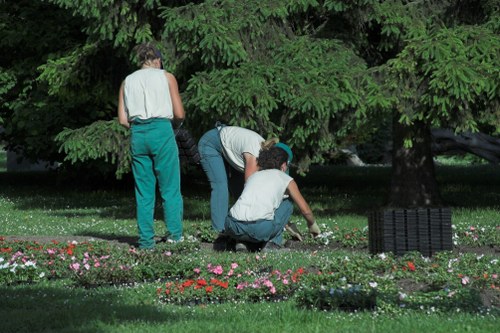 In line with borough approaches to waste separation, our crews follow separate collection practices: dry recycling for plastics, metals and paper, food waste where collected, and a distinct stream for garden organics. This light-touch adaptation of local council policies helps integrate our work seamlessly with municipal services while increasing the proportion of diverted material from the waste stream.
Designing an eco-friendly waste disposal area also means investing in transport and logistics. We operate a fleet of low-carbon vans and electric support vehicles where site power permits charging. Route optimisation software reduces mileage, and scheduled collection windows coordinate with transfer station opening times to lower emissions and improve turnaround.
Practical recycling and reuse activities we run include:
- On-site composting and leaf-mould production for use as mulch;
- Segregated wood chipping, with coarse mulch returned to beds;
- Donation of viable plants, pots and tools to local charities and community gardens;
- Sorting and packaging of recyclable plastics and metal for borough collection.
Our sustainable rubbish gardening area emphasises closed-loop practices: soil is screened and amended rather than discarded, prunings are turned into habitat piles or woodchip, and containers are cleaned and recycled with municipal streams. These actions reflect best practice in inter-borough waste separation while remaining practical for household and small-commercial clients.
Monitoring, Reporting and Continuous Improvement
We maintain transparent records of diversion rates and carbon reductions. Using weekly manifests and vehicle telemetry, we measure tonnage diverted to composting, tonnes reused on site, and volumes sent to transfer stations. This monitoring supports our 70% recycling percentage target and feeds into annual assessments to refine processes and adopt new low-impact techniques.
 Our charity partnerships extend beyond donations: we coordinate community days to supply mulch, soils and plant cuttings to schools and community horticulture programmes. These events support local biodiversity and provide practical training in composting and low-waste gardening. Neighbourhood initiatives are encouraged to adopt similar separation habits, amplifying borough-level efforts to keep organic material out of residual waste.
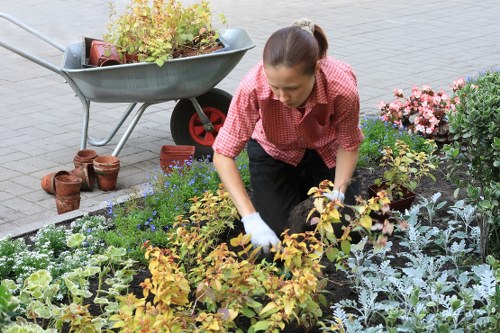 In conclusion, the Gardener Brent Cross sustainability plan blends practical site solutions with community collaboration and low-emission logistics. We prioritise an eco-friendly waste disposal area and a robust, sustainable rubbish gardening area that reduce landfill, support charity partners and align with the London boroughs' approaches to waste separation. Our low-carbon vans, clear recycling targets and partnerships make the plan actionable, measurable and adaptable as technologies and local policies evolve. We are committed to steady progress, environmental stewardship and delivering garden services that leave a lighter footprint on Brent Cross and surrounding neighbourhoods.